Under the Afternoon Sun: How Matinee Lighting Is Rewriting the Rules of Stage Makeup
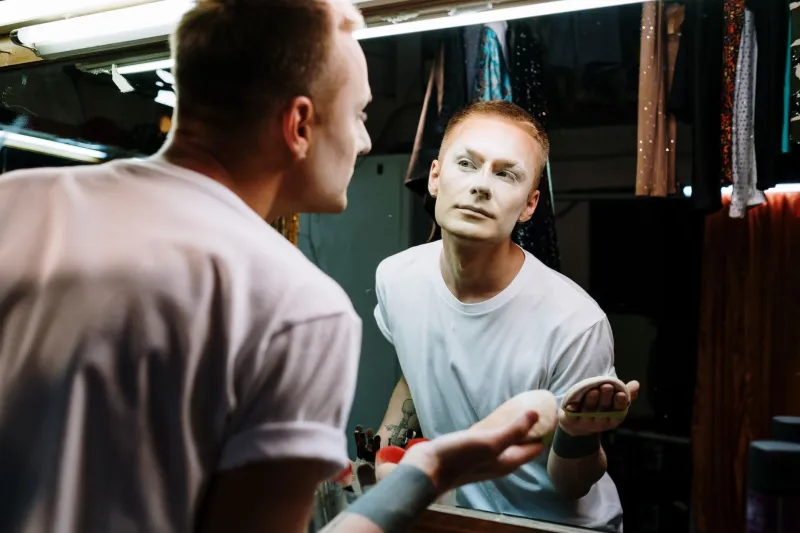
There's a moment every seasoned theatergoer knows. You settle into your seat for a 2 PM Saturday matinee, the house lights dim, and the stage floods with light. It's a different kind of brightness than what you'd get at an evening show — more exposed, somehow more honest. Shadows fall differently. Colors read differently. And if you're a performer standing under those instruments, or even an audience member catching your reflection in the lobby mirror at intermission, you might notice something a little unsettling: your makeup looks completely wrong.
Afternoon theater has a lighting problem — or more accurately, a lighting reality — that the beauty world is only just starting to take seriously. And the people closest to the stage are already way ahead of the curve.
Why Afternoon Light Plays by Different Rules
Here's the short version of the science: natural daylight, which bleeds into theater lobbies and sometimes even into house interiors during early afternoon performances, sits at a much higher color temperature than the warm tungsten or amber-heavy stage lighting traditionally used for evening shows. Daylight runs cool and blue. It's unforgiving in the way that a bathroom fluorescent bulb is unforgiving — it exposes texture, sheerness, and anything that isn't fully blended.
Stage lighting for matinees is also often adjusted to compensate for that ambient daylight, meaning the gel colors and intensities a lighting designer chooses for a 2 PM show can differ meaningfully from what they'd use at 8 PM. The result is a cocktail of light sources that can wash out certain pigments entirely, make warm-toned foundations look ashy, and cause shimmer to read as flat rather than luminous.
"Evening shows have this natural advantage — the darkness outside creates contrast that flatters almost everything," says Renata Voss, a New York-based theatrical makeup artist who has worked on Broadway productions and regional theater across the Northeast. "Matinees strip that away. You're essentially working without a net."
The Performer's Perspective: More Pigment, More Precision
For performers, the matinee lighting challenge has long been handled by going heavier — more pigment, more definition, more contrast. But the approach is getting more nuanced as makeup technology improves and as directors push for looks that feel naturalistic even under bright conditions.
Voss explains that for afternoon performances, she tends to build foundation in thinner layers rather than one heavy application, using products with higher pigment density so color doesn't disappear under cool-toned light. "You want the makeup to read, but you don't want it to look like a mask," she says. "The trick is saturation without thickness."
Eye work is especially critical. Under afternoon stage lighting, softer evening smoky eyes can vanish entirely, so liner becomes more intentional — tighter to the lash line, more defined at the outer corners. Lip color gets a bump in intensity too. Nudes that photograph beautifully in evening light can turn ghostly under the cooler, brighter conditions of a matinee stage.
Costume designer and occasional makeup collaborator Delia Park, who works with a regional theater company in Chicago, puts it plainly: "We always tell performers that what feels like too much in the dressing room mirror is probably just right for a 2 PM show. The light will eat at least 30 percent of what you put on."
What the Audience Is Learning
Here's where it gets interesting for the rest of us. Theatergoers — especially those who attend matinees regularly — are quietly picking up on the same principles, applying them to their own getting-ready routines before heading to an afternoon show.
The matinee audience experience is different from an evening out. You're often getting ready in full daylight, which means you can actually see your makeup clearly while you're applying it. But then you walk into a theater environment where the lighting shifts dramatically, and suddenly that carefully blended look feels underdone or, in other cases, weirdly off.
Beauty enthusiasts who frequent afternoon performances have started thinking about this transition deliberately. The goal is a look that holds up in daylight on the way in, reads well under house and stage lighting during the show, and doesn't require a full refresh at intermission.
Makeup artist and beauty content creator Jasmine Okafor, who documents her theater-going beauty routines for a growing online audience, has developed what she calls her "matinee formula." It involves a skin-tint or serum foundation as a base (sheer enough for daylight) layered with a buildable concealer at key points, matte blush in a slightly deeper shade than she'd normally choose, and a lip color one to two shades richer than her everyday pick.
"The afternoon light will soften everything," Jasmine explains. "So you compensate going in. By the time you're sitting in that theater, everything looks perfectly balanced."
Longevity Is the Other Half of the Equation
There's another wrinkle that afternoon performances introduce: timing. A 2 PM show often means you're applying makeup around noon, which means by the time curtain call hits — especially for longer productions — you could be pushing five or six hours of wear. That's a different longevity demand than an evening application where you might be fresher when you arrive.
Setting products have become non-negotiable for the matinee crowd. Translucent setting powders, long-wear primers, and setting sprays are all getting more attention from performers and audience members alike. Voss recommends a light dusting of a finely milled setting powder over any areas prone to shine, followed by a finishing spray, as a baseline for any afternoon performance.
For lip color specifically, the combination of a lip liner slightly overlapping the natural lip line (to prevent feathering as the day progresses) and a transfer-resistant formula has become something of a matinee standard among the beauty-conscious theatergoers Jasmine profiles.
The Bigger Shift
What's quietly happening in theater lobbies and dressing rooms across the country is a recognition that context matters in beauty — that the lighting environment you're dressing for should inform every product choice you make. Evening makeup logic doesn't automatically translate to afternoon performance spaces, and the people who understand that are arriving at matinees looking more put-together, more intentional, and frankly more interesting than those who just replicated their usual nighttime routine.
It's a lesson the stage has always known. The rest of us are just catching up.
Next time you're getting ready for a Saturday matinee — whether you're performing or just showing up with your Playbill and a bag of lobby candy — think about the light you're walking into. Go a little richer on the lip. Add a touch more definition around the eyes. Set everything like you mean it. The afternoon stage is waiting, and it rewards those who come prepared.


