Why Your Afternoon Brain Is Wired to Feel Every Joke, Every Tear, and Every Moment Onstage
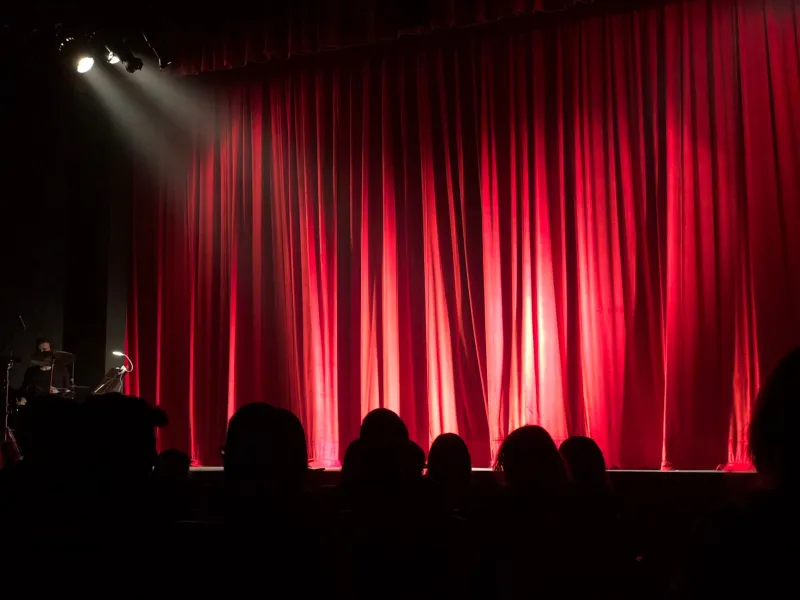
You've probably noticed it without quite being able to name it. You're sitting in a theater at 2 PM on a Saturday — maybe a comedy, maybe a drama — and the room just crackles. The laugh lines land like thunderclaps. The quiet moments feel genuinely heavy. By the time the curtain drops, you're emotionally spent in the best possible way, and the strangers next to you suddenly feel like people you've known for years.
Evening shows are great. Nobody's disputing that. But seasoned performers will often tell you, sometimes in hushed, almost reverential tones, that matinee crowds are different. Wilder. More open. More alive to what's happening onstage.
So what's actually going on? Turns out, a lot — and the answers live somewhere between neuroscience, social psychology, and the quirky rhythms of the human body.
Your Brain at 2 PM: A Surprisingly Receptive Machine
Here's the thing about circadian rhythms that most people don't think about in the context of entertainment: they don't just govern when you feel sleepy. They shape your entire emotional landscape throughout the day.
Research in chronobiology — the study of biological time cycles — shows that the mid-afternoon window, roughly between 1 and 4 PM, is a period of heightened emotional sensitivity for many people. Cortisol, the stress hormone that peaks sharply in the morning and keeps us alert and task-focused, has begun its gradual decline by early afternoon. What steps in to fill some of that space? A more relaxed, socially open neurological state.
Dr. Russell Foster, a circadian neuroscientist at the University of Oxford, has written extensively about how afternoon timing intersects with mood regulation. While his work focuses broadly on sleep and light cycles, the implications for social and emotional experience are striking: people in the mid-afternoon window tend to be more empathetically attuned, more responsive to humor, and more willing to engage emotionally with external stimuli.
In plain English? Your afternoon brain is primed to feel things.
The Dopamine Window Nobody Talks About
Dopamine gets a lot of press as the "reward chemical," but its role in emotional receptivity is just as important as its role in pleasure-seeking. Studies suggest that dopamine fluctuates throughout the day in patterns that align with circadian rhythms, and that the afternoon period — particularly for people who wake between 6 and 8 AM — often corresponds to a secondary dopamine availability window.
What that means practically: you're more likely to find things funny, more likely to be moved by something beautiful, and more likely to feel connected to the people around you during a 2 PM show than during a 9 PM one.
Comedians have known this intuitively for decades, even without the neurochemical vocabulary to explain it. "Matinee crowds don't need to be warmed up the same way," says one veteran stand-up comic who's performed at clubs across the Midwest and Northeast for over fifteen years. "Evening audiences, especially weekend nights, they come in with a kind of performance energy themselves. They want to have a good time, but they're also performing having a good time. Afternoon crowds? They just... let it happen."
That distinction — performing enjoyment versus simply experiencing it — turns out to be crucial.
Social Pressure, or the Lack Thereof
Evening entertainment carries cultural weight. A Saturday night out is loaded with expectation. You dressed up. You made a reservation. You told people about it. There's an unspoken social contract that the night needs to deliver, and that pressure subtly changes how audiences receive what's in front of them.
Matinee audiences, by contrast, tend to arrive without that baggage. They came because they wanted to, not because it was the thing to do. Theater directors across the country have noted this distinction when describing the difference in house energy between their weeknight and weekend evening shows versus their Sunday afternoon performances.
"Sunday matinees are my favorite houses to watch from the back of the theater," says one regional theater artistic director based in Chicago. "The audience isn't performing for each other. They're just there. And when a moment lands, it really lands — because nobody's checking to see if the person next to them is reacting first."
This is backed up by research in social psychology around what's called "evaluation apprehension" — the tendency to modulate our own responses based on perceived social scrutiny. In lower-stakes social settings, evaluation apprehension drops, and authentic emotional response goes up. A Sunday matinee, it turns out, is about as low-stakes as public entertainment gets. And paradoxically, that makes the emotional experience higher stakes in every way that matters.
The Group Effect: Why Afternoon Audiences Bond Faster
There's another layer to this that has less to do with individual brain chemistry and more to do with collective dynamics. Research on what psychologists call "collective effervescence" — a term coined by sociologist Émile Durkheim to describe the shared emotional energy that emerges in group settings — suggests that the conditions for this phenomenon are more easily met in afternoon contexts.
Collective effervescence requires a kind of social openness, a willingness to be present and permeable to the group's emotional current. Evening audiences, particularly in urban settings, can be more guarded, more individually oriented. Afternoon audiences tend to arrive in a more socially porous state.
The result is something performers describe as a feedback loop. The audience laughs openly, which makes others laugh, which builds a shared energy that flows back to the stage, which elevates the performance, which deepens the audience's investment. It snowballs in the best possible way.
"You can feel when a room decides to be together," says a theater actor who's performed in both Broadway and regional productions. "Matinees, especially weekend ones, they decide faster. It's like they walked in already halfway there."
Light, Time, and the Texture of Experience
There's also something worth noting about the sensory context of afternoon entertainment that often gets overlooked: natural light. Entering a darkened theater from a bright afternoon creates a more dramatic perceptual shift than walking in from a dark evening street. Your eyes adjust, your senses recalibrate, and the world of the stage asserts itself with particular authority.
This isn't just poetic. Research in environmental psychology suggests that abrupt transitions from high-stimulation to low-stimulation environments — like stepping from a sunny sidewalk into a dim theater — can heighten attentional focus and deepen immersive experience. The afternoon, in other words, sets the stage before the stage even sets itself.
So What Does This Mean for You?
If you've been defaulting to evening shows out of habit, it might be worth rethinking your entertainment calendar. The matinee isn't a consolation prize or a budget option (though it often is both). It's a genuinely distinct experience — one shaped by biology, social psychology, and the particular texture of the afternoon itself.
Your brain is more open. Your guard is lower. The people around you are more willing to feel things out loud. And the performers on that stage? They know it too.
The curtain goes up at 2 PM, and something different happens. Science is finally starting to catch up to what audiences have been feeling all along.