Why the 2 PM Crowd Always Has the Best Questions
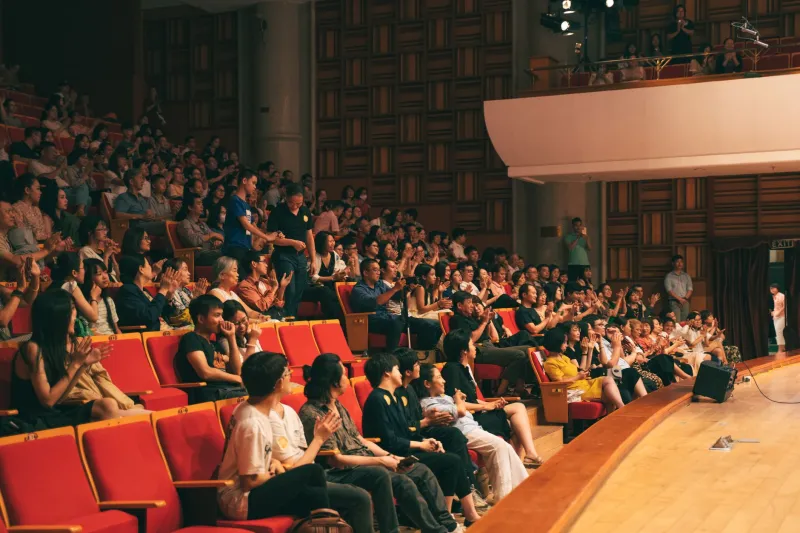
Anyone who's ever sat through a post-show Q&A at a regional theater on a Tuesday afternoon knows the feeling. The house lights come up, a moderator steps to the mic, and something unexpected happens: the questions are actually good. Like, genuinely thoughtful, follow-the-thread-all-the-way-down good. Not the usual "where did you train?" or "how long did rehearsals take?" kind of good. We're talking about the kind of question that makes the director pause, tilt their head, and say "huh — nobody's ever asked me that before."
So what's going on? Is it the crowd? The time of day? The fact that nobody's had three glasses of pinot grigio yet? Probably a little of all three — but the story goes deeper than that.
The Afternoon Audience Is a Self-Selected Group
Let's start with the obvious: who actually goes to a matinee? Not the person who stumbled into a show because it was the easiest Friday night plan. The 2 PM crowd is, almost by definition, intentional. They rearranged their schedule. They took a half-day, found a sitter, or made a deliberate choice to spend their afternoon in a theater seat instead of at a desk or a mall.
That intentionality matters. Theater educator and dramaturg Priya Chandrasekaran, who has facilitated post-show discussions at regional theaters across the Midwest for over a decade, puts it plainly: "Evening audiences often come because it's a social occasion. The show is part of a bigger night out. Matinee audiences come because they actually want to see the show. That changes everything about how they receive it."
When you're not mentally calculating how long the Uber home will take or whether you'll make it to the restaurant reservation, you have more cognitive bandwidth to actually sit with what you just watched. And sitting with it is exactly what produces a good question.
Daylight Does Something to Your Brain
Here's where it gets genuinely interesting. Cognitive research on alertness and mental engagement consistently points to the mid-afternoon window — roughly 1 to 4 PM — as a sweet spot for certain kinds of reflective thinking. You're past the fog of morning and not yet hitting the fatigue wall of early evening. Your brain is alert but not overstimulated.
For a Q&A, that's a meaningful difference. Asking a good question in a public forum requires a specific kind of mental courage and clarity — you have to organize a thought, assess whether it's worth saying out loud, and then actually say it in front of strangers. Afternoon audiences, operating in that cognitive sweet spot, are better equipped to do exactly that.
"There's a looseness to the afternoon crowd that I genuinely love," says Marcus Webb, a theater director based in Chicago who has helmed productions ranging from storefront experimental work to mainstage musicals. "Evening audiences can be a little guarded during Q&As. They're tired, they're thinking about getting home. Afternoon audiences linger. They want to keep talking. And the questions they ask reflect that."
The Social Pressure Is Lower — and That's a Good Thing
Evening Q&As carry a particular kind of social weight. The house is fuller. There's more of an audience for your question, which means more opportunity to either look smart or look foolish. That pressure, even when it's subtle, shapes what people are willing to ask. You get safer questions because safer questions are lower risk.
Afternoon shows tend to draw smaller, cozier houses. The intimacy changes the math. When you're sitting in a theater with 80 people instead of 400, asking a question feels less like a performance and more like a conversation. And conversations, as any good dramaturg will tell you, are where the real work happens.
This is something that long-running matinee series have figured out. The Roundabout Theatre Company's afternoon programming in New York, for instance, has developed a reputation for unusually candid post-show exchanges. Audience members routinely bring up themes, character choices, and structural questions that catch even seasoned performers off guard — in the best possible way.
What Performers Actually Notice
Talk to actors who've done both, and they'll almost universally tell you that afternoon Q&As are their favorite part of the job. Not because the audiences are easier — they're not. It's because the feedback loop is richer.
"I've had evening Q&As where I answered the same five questions fifty times," says one actress currently performing in a touring production of a contemporary drama (who asked to remain unnamed because she didn't want to seem like she was playing favorites with her audiences). "Afternoon Q&As feel like the audience actually processed the show. They'll bring up a moment in Act Two that I thought nobody noticed, and they'll have a whole theory about it. That's thrilling. That's why I do this."
Directors report something similar. The afternoon crowd tends to engage with the material on a thematic level rather than a procedural one. Instead of asking how the set was built, they ask why a particular design choice was made. Instead of asking how long the run is, they ask what the show is really about — and then offer their own answer before the director can respond.
What This Tells Us About Afternoon Culture
The matinee Q&A phenomenon is really just a specific expression of something broader that afternoon culture does well: it creates space. Space to think, space to feel, space to engage without the noise and urgency that tends to dominate our evenings.
Afternoon entertainment — whether it's a matinee performance, a daytime museum visit, or a weekday afternoon film screening — has a quality of unhurriedness that's increasingly rare. And when people have room to breathe, they tend to show up more fully. They ask the question they actually want to ask instead of the one that seems safest. They stay in the room a little longer. They let the experience matter.
That's the matinee effect, really. It's not just about what time the curtain goes up. It's about what happens when you give people the afternoon and trust them to do something meaningful with it.
Next time a show you're interested in offers a post-show discussion at a matinee, do yourself a favor: go. Stay for the conversation. You might just ask the question that makes the director lean in.