Why the 2 PM Curtain Call Sticks With Kids Long After the Lights Come Up
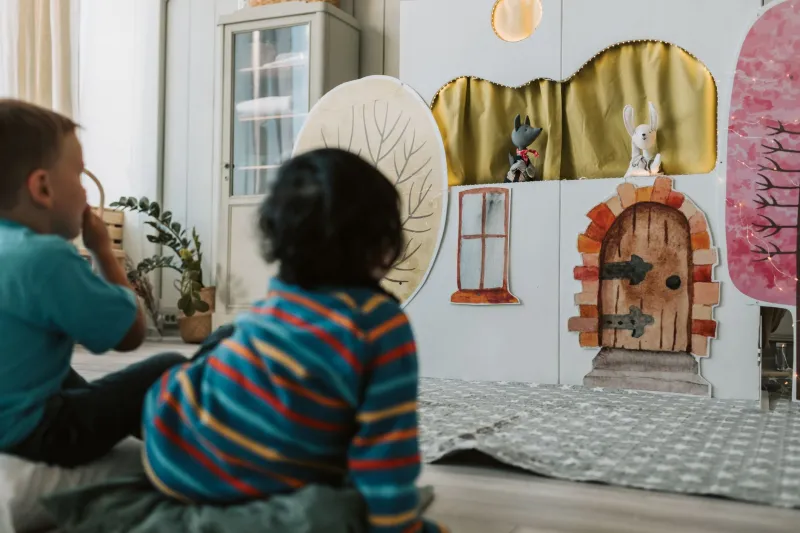
Ask any adult about their first theater experience and there's a decent chance the details are surprisingly vivid. The velvet seats. The way the lights dimmed. The moment the curtain moved. Now ask them what time of day it was, and a good number will tell you it was an afternoon show — a Saturday matinee, a school field trip that ended with a standing ovation, a Sunday outing with grandparents who insisted on dressing up for the occasion.
That clarity isn't accidental. A growing body of research in developmental psychology and neuroscience suggests that children don't just experience afternoon theater differently — they remember it differently. More vividly. More emotionally. And often, more permanently.
The Brain at 2 PM: A Different Kind of Attention
Here's something worth knowing about the way kids' brains operate: cognitive alertness in children tends to peak in the late morning and again in the early afternoon, typically between 1 and 3 PM. Unlike adults, who often hit a post-lunch slump, younger children — particularly those under 12 — experience a second wind of mental engagement right around the time most matinee performances begin.
"Children's circadian rhythms are genuinely different from adults," explains Dr. Mara Hollins, a developmental psychologist based in Chicago who has worked with school-age children for over fifteen years. "Their cortisol patterns, which are tied to alertness and focus, often support a kind of heightened receptivity in the early afternoon. They're not fighting fatigue the way a lot of grown-ups are at that hour. They're actually quite switched on."
That heightened alertness matters enormously in a theater setting, where a child's ability to follow narrative, track emotional cues, and absorb new vocabulary all depend on sustained attention. When the brain is fully engaged, sensory details get encoded more deeply — which is part of why the smell of a theater lobby or the sound of an orchestra tuning can trigger such specific childhood memories decades later.
Evening Shows and the Tired Kid Problem
Contrast that with the evening theater experience. By 7 or 8 PM, most children — even those who swear they're not tired — are operating on depleted cognitive reserves. The school day, after-school activities, homework, and dinner have all taken their toll. A child sitting in a darkened theater at that hour is fighting a biological pull toward sleep, and the brain under those conditions simply doesn't encode memory with the same fidelity.
"I've had parents tell me they took their kids to a highly acclaimed evening production and their child barely remembered it two weeks later," says Jennifer Castillo, a theater educator who runs youth programs at a regional performing arts center in Austin, Texas. "Then they'll describe a Saturday afternoon show they saw three years ago in incredible detail — the costumes, a specific line of dialogue, the way a character made them laugh. The difference is almost always the timing."
It's not just about tiredness, either. Evening performances often carry a different kind of social pressure for young attendees. The stakes feel higher. Bedtimes loom. Parents may be more anxious about behavior or noise. That ambient stress, however subtle, can interfere with the relaxed, open state that allows for deep emotional engagement.
Emotion and Memory: Why Matinees Make an Impression
One of the most fascinating aspects of childhood memory formation is the role that emotion plays in it. The amygdala — the brain's emotional processing center — essentially acts as a highlighter, flagging experiences as worth keeping based on how strongly they're felt. Joyful, surprising, or moving experiences get marked for long-term storage. Flat or stressful ones often don't.
Afternoon theater, it turns out, creates ideal conditions for emotional engagement in young audiences. The combination of alertness, lower stress, and the novelty of a live performance means children are primed to feel things fully. And when they feel things fully, those feelings get encoded alongside the memory of the experience itself.
"Theater is already an emotionally rich medium," says Dr. Hollins. "When you add the factor of a child being in an optimal state to receive it — not overtired, not overstimulated from a long day — you get this almost perfect storm for meaningful memory formation. The emotion amplifies the encoding."
Parents who've made afternoon theater a regular part of their family routine often notice this effect without knowing the science behind it. "My daughter still talks about a production of Matilda we saw on a Sunday afternoon when she was seven," says Priya Mehta, a mother of two from suburban Philadelphia. "She could tell you what the actress was wearing, what made her cry, what made her laugh. We saw another show that same year on a Friday night and she barely remembers it existed."
The Educational Bonus Nobody Talks About
Beyond pure memory, afternoon theater offers something that evening performances often can't: the chance for real-time processing and discussion. When a matinee wraps up at 4 or 4:30 PM, there's still time — over a snack, on the drive home, at the dinner table — to talk about what just happened. That conversational reflection is, according to educators, one of the most powerful tools for consolidating learning and emotional understanding.
"The post-show conversation is where so much of the educational value lives," says Castillo. "When a child can immediately talk through what they saw while it's fresh — ask questions, share what surprised them, process a complicated emotion they felt — it deepens the experience exponentially. Evening shows often end too close to bedtime for that to happen naturally."
Many schools have caught on to this dynamic. Field trip performances are almost always scheduled in the morning or early afternoon, a choice that's partly logistical but also, increasingly, intentional. Theater companies that run educational outreach programs have long observed that student matinees generate more engaged post-show discussions and more lasting impact than any other format.
Making the Most of the Afternoon Theater Experience
If you're planning to take a child to a live performance, a few practical considerations can help maximize what they take away from it.
Arrive early and let them explore. The lobby, the program, the architecture of the theater — all of it is part of the experience. Giving kids time to settle in and get curious before the show starts helps prime their attention.
Skip the big meal right before. A heavy lunch can contribute to drowsiness even in the early afternoon. A lighter, satisfying meal — or a snack at the venue — keeps energy steady without inducing a food coma.
Talk about it right after, not later. Resist the urge to table the conversation for bedtime. Ask specific questions on the walk to the car: What was your favorite part? Did anything surprise you? How do you think that character felt? The sooner the reflection happens, the better it sticks.
Choose age-appropriate content, but don't underestimate them. Children often surprise adults with their capacity to engage with complex themes when those themes are presented through compelling storytelling. Trust the medium.
Make it a ritual. The kids who grow up to be theater lovers — or simply adults with a deep appreciation for live performance — are usually the ones who saw shows regularly, not just once. A quarterly afternoon outing builds both familiarity and anticipation.
The Memory That Outlasts the Program
There's a reason so many adults can describe a childhood matinee in the kind of detail usually reserved for milestone life events. The afternoon, it turns out, is not just a convenient time to fill a weekend — it's a neurologically optimized window for giving a child an experience that genuinely lasts.
The curtain comes down. The lights come up. And somewhere in a young brain, something just got filed away for keeps.