Caught Off Guard at 2 PM: Why Matinee Audiences Get Hit Harder by Plot Twists
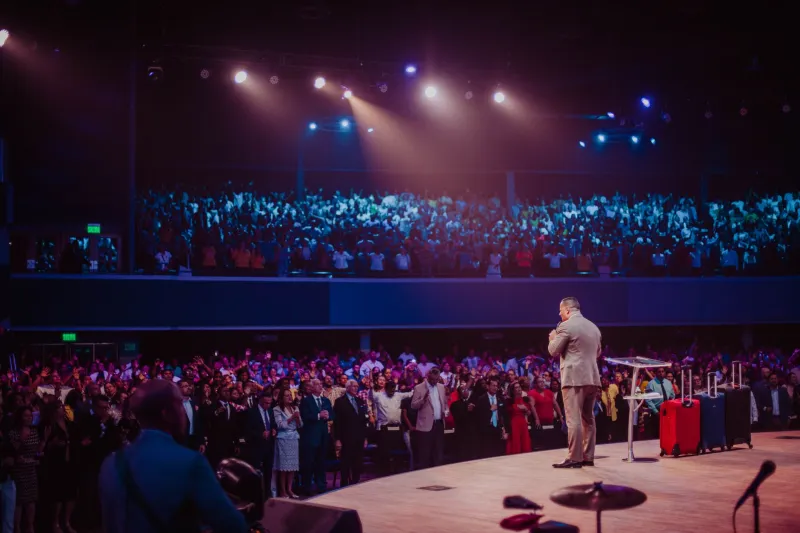
Ask any stage manager who's worked both matinee and evening performances of the same show, and they'll tell you something peculiar. The gasp at the end of Act Two lands differently at 2 PM. Not louder, necessarily. Deeper. The kind that ripples through a house and makes the actors pause for just a half-beat longer before delivering the next line.
For years, theater people chalked this up to folklore — the kind of behind-the-curtain mythology that gets passed around backstage like a good ghost story. But a growing body of research into cognitive attention, emotional priming, and narrative processing is starting to suggest that the matinee crowd's heightened reaction to plot surprises isn't just anecdote. It might be neuroscience.
What the Brain Is Actually Doing at 2 PM
Here's the short version: your brain in the early afternoon is operating in a genuinely different mode than it does at 8 PM.
Cognitive scientists who study circadian rhythms have long documented what's sometimes called the "post-lunch dip" — a window between roughly 1 and 3 PM when alertness softens, analytical thinking slows slightly, and the brain shifts toward a more associative, emotionally receptive state. For most people, this feels like a mild fog. But in the context of live storytelling, that fog turns out to be surprisingly useful.
"When your analytical defenses are a little lower, you're less likely to be actively predicting what happens next," explains one behavioral researcher who studies audience cognition. "You're absorbing rather than forecasting. And that's exactly the mental posture that makes a plot twist land like a freight train."
Evening audiences, by contrast, tend to arrive at the theater in a higher state of cognitive arousal — they've navigated rush hour, made dinner decisions, maybe had a drink at the bar. Their brains are running hot, pattern-matching aggressively, and quietly building predictive models of where the story is headed. They're engaged, certainly. But they're also harder to surprise.
The Playwright's Perspective
Several working playwrights have started factoring this dynamic into how they think about their audiences — even if they wouldn't always frame it in neurological terms.
One New York-based playwright who recently had an off-Broadway production running weekend matinees described noticing a consistent difference in audience response during talkbacks. "The matinee crowds would ask questions like, 'I had no idea that was coming — how did you hide it so well?' And the evening crowds would ask more analytical stuff, like 'Was the foreshadowing in Act One intentional?' They'd already been working it out in their heads."
That's not a knock on evening audiences — analytical engagement is its own form of appreciation. But it does point to something real about how the same narrative can deliver two entirely different experiences depending on when you walk through the door.
Directors have noticed it too. A regional theater director based in Chicago described adjusting the pacing of a thriller production after watching multiple runs. "The matinee version of that show felt tighter, even though we weren't changing a single line. The audience's energy was different. They were leaning in without knowing they were leaning in."
Expectation-Setting and the Afternoon Mindset
There's also a social psychology angle worth considering. Evening performances carry a certain cultural weight — they're events, occasions, things you dress up for and make reservations around. That anticipation primes audiences to be on their best interpretive game. They've been thinking about the show since they booked the tickets.
Matinee audiences often arrive with a lighter psychological footprint. Maybe they grabbed lunch nearby and decided to catch a show. Maybe it's a spontaneous Sunday afternoon plan. That lower expectation-setting, counterintuitively, creates more room for the story to do its work.
"There's a term in theater called 'beginner's mind,'" says one drama coach who works with college students in the Pacific Northwest. "It's this idea of approaching a performance without preconceptions. Matinee audiences often have it by accident. They're not performing their own appreciation the way evening crowds sometimes are."
That observation stings a little, but it rings true. Evening theater has a social performance layer baked in — you're seen attending, you discuss it at dinner afterward, you have opinions ready. The afternoon strips some of that away.
When the Twist Actually Twists
So what does all of this mean for the actual mechanics of narrative surprise? A lot, it turns out.
Plot twists work by violating a prediction the audience has already made. The more confidently the audience has built that prediction, the harder the violation hits — but only up to a point. If the analytical brain is running too hot, it sometimes catches the trick before it lands, the way a magician's misdirection fails when someone in the front row is actively looking for the sleight of hand.
The afternoon cognitive state seems to hit a kind of sweet spot. Audiences are attentive enough to follow the narrative thread, but relaxed enough that they haven't been aggressively stress-testing the story's architecture. The twist arrives in a brain that's been absorbing rather than auditing, and the result is that full-body jolt — the gasp, the involuntary laugh, the sudden sting of tears — that every playwright is chasing.
"I've started thinking about matinee audiences as my canary in the coal mine," said one playwright during a post-show conversation in Boston. "If the twist works on a Saturday matinee crowd, it works. If it doesn't land there, I know I need to go back and look at the setup."
The Takeaway for Theatergoers
If you're someone who loves the experience of being genuinely surprised by a story — and let's be honest, that's most of us — there's a real case for making the matinee your default.
You'll likely pay less. You'll almost certainly get better seats. The house will feel more intimate, the energy more unguarded. And according to both the science and the people who make theater for a living, your brain will be in exactly the right state to let the story do what it was designed to do.
The plot twist you never saw coming? It's been waiting for you at 2 PM all along.